Showing posts with label Travel. Show all posts

Thursday, September 19, 2013

The perfect trip: Cambodia


Marvel at the palaces, markets and bars of the capital, Phnom Penh, before heading north to Siem Reap for excursions to a floating village on Tonlé Sap Lake and the extravagant, inspirational temples of Angkor. From there, it is south to the untouched jungles of the Cardamom Mountains, finishing with a homestay on a rural family farm.
Phnom Penh: Best for culture
Phnom Penh is eerily quiet. A sole remork – the usually ubiquitous motorised rickshaw – rolls languorously past the Royal Palace to a deserted Tonlé Sap riverfront. Here, among the shuttered-up shops facing the palm-lined promenade, food stalls sell noodle soup and beef skewers to infrequent customers.
The peace doesn’t last. As the Khmer festival that emptied the city ends, Phnom Penhois who’d been drawn to rural family gatherings in their tens of thousands flood back to the capital and the beguiling chaos resumes. After a troubled history, which reached its nadir with the Khmer Rouge’s enforced eviction of the city in the ’70s, the ‘Pearl of Asia’ is thriving, with a flourishing café culture and a glut of world-class fusion restaurants.
Prosperity has added an extra sheen to its cultural institutions too, many of which were built during Cambodia’s French Protectorate era, beginning in 1863. Among these is the Art Deco Psar Thmei, a pastel-yellow covered market with four wings radiating from an enormous central dome.
A few hours after dawn and the Central Market, as it is also known, is already a blur of browsing and bartering. Business is brisk at textile stalls selling traditional checked krama scarves, while elsewhere chattering shoppers weave past fruit outlets piled with lychees and crimson dragon fruit, and stalls overflowing with lotus flowers and bunches of fragrant Rumdul, Cambodia’s national flower.
Just a few blocks from the market, the National Museum is close enough to the riverfront to receive some of its welcome breeze. A group of schoolchildren in matching white polo shirts and flip-flops plays in the shade of the terracotta building’s neatly tended garden while, inside, visitors reflect upon 1,000 years of Khmer sculpture.
The adjacent Royal Palace, with its glistening spires and dragon-tail details, still dominates the city’s low-rise skyline. In a corner of one of its courtyards, a team of artists is working to restore a 1901 mural of the Reamker – Cambodia’s version of the epic Hindu poem the Ramayana.
 ‘When I did classical painting at university, we studied the Ramayana,’ says lead artist Roeung Sreyna, gesturing to the mural behind her, where spirits and horse-drawn chariots float over a celestial palace in the sky.
 The project is slow and technical. Matching the colours takes time, as does cleaning stains and fixing damage from humidity. ‘We take one section at a time,’ she says, pointing at a three-foot-wide band. ‘Two months for each section, and we have to work slowly. If it were a normal painting, we could do it in a year, but this is our history, so we have to take care.’
Tonlé Sap: Best for lake life
In the village of Me Chrey, the streets are made of water and the wooden houses float. The village’s 500 families are among the thousands who have settled on the surface of the freshwater Tonlé Sap, Cambodia’s ‘Great Lake’, where, not surprisingly, life revolves around the water. As dawn breaks, Me Chrey is already abuzz. Toddlers paddle small aluminium tubs down the main street, fruit and vegetable sellers in bright floral clothing and conical hats navigate boats between houses, and householders check for breaches in ‘fish banks’ – submerged reed baskets where fish are kept until market day. Shouted greetings and lively chatter are punctuated by the occasional snort of a pig from a floating pen. Further out on the water, a family retrieves traps and nets laid out in wide, intricate arrangements.
It’s an itinerant existence. The floating houses, which are tied to one another, are moved by the villagers four times a year to follow migrating fish stocks. The lake’s wildly fluctuating dimensions also a play a part – in the rainy season, Tonlé Sap swells to more than 6,000 square miles, raising the floating houses by around eight metres. Dry season sees the potential spots to anchor reduced significantly.

Top 10 UK farm-stay holidays


Top 10 UK farm-stay holidays

Mark the turning of the seasons with a getaway down on the farm. Many offer fresh-from-the-field food, some let you (or the kids) feed the animals, and all offer a great dose of fresh air
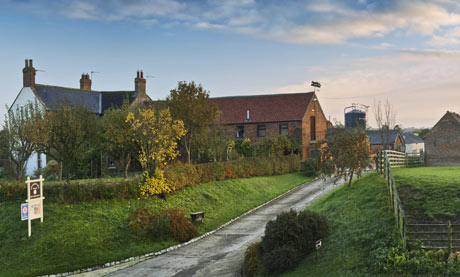
Brackenborough Hall farm, Lincolnshire

Brackenborough Hall Farm, Lincolnshire

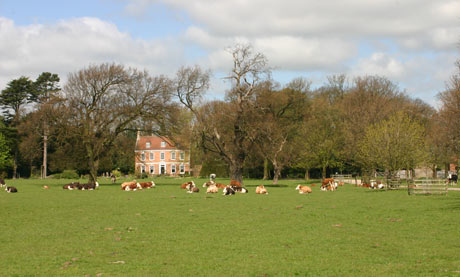
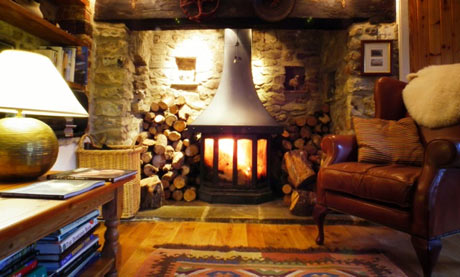
A moated manor house is at the heart of this biodiverse farm, but the accommodation is in three smart apartments in a converted 18th-century coach house. The lofty Granary features beamed and vaulted ceilings and inner workings of the original clock tower; and the Saddle Room and Stables makes use of old hay racks, feed troughs, mangers and herringbone stone or brick floors. The apartments sleep three to 12 people, or rent all three for a party of up to 24. Owners Paul and Flora Bennett offer complementary Lincolnshire plum bread from nearby Louth market and free guided tours of the estate – 800 acres of cattle-grazed parkland, oak woodlands and wildlife (roe deer, rabbits, barn owls and a rich variety of birds; hawthorn, sloe and blackthorn berries decorate the hedges in autumn). The manor also boasts Victorian kitchen gardens, a grass tennis court and a deserted medieval village.
• 01507 603193, brackenboroughhall.com. Self-catering from £340 a week for three or four to £655 for eight (short breaks also available)

Bre-Pen Farm, Cornwall

On a cliff, overlooking the sea at Mawgan Porth, Rod and Jill Brake's diverse north-coast farm sits on 60 acres of National Trust land. As well as farmhouse B&B, they run a tea-room (home-baked cakes and cream teas) and a farmshop (try Bre-Pen's own lamb and mint sausages, salads and seasonal vegetables and free-range eggs). At weekends, young chef Jon Harvey (ex Jamie Oliver's Fifteen Cornwall) runs the farm's bistro – £20 for three courses and bring your own wine. It's not the prettiest of farmhouses but the location – between Newquay and Padstow – is magic. Just sit in a field of sheep and gawp at the Atlantic. Take a Land Rover farm safari. You can get married here, too.
• 01637 860420, bre-penfarm.co.uk. B&B from £40 a night singles, £70 double, £99 family suite

Nettlecombe Farm, Isle of Wight

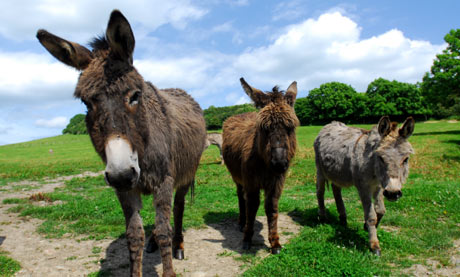
Nettlecombe Farm, Isle of Wight Populated with donkeys, alpacas, reindeer, goats, Buff Orpington hens, a goose called Gordon and peacock called Percy, this isn't your run-of-the-mill livestock farm – but it's set in 150 acres of peaceful South Wight countryside and it's heaven for kids. The farm's nine, family-size self-catering properties includes a stone cottage, a converted milking parlour and a farmhouse. As well as grassy play areas (furnished with a Wendy house and wooden tractor), there are three fishing lakes, access to cycle routes and some great walks (bring your own dog). Glorious views and only 10 minutes' drive from seaside Ventnor.
• 01983 730783, nettlecombefarm.co.uk. Self-catering cottages of various sizes, from £300 a week (sleeps four) or £545 (sleeps eight), low season (off-season short breaks available)

Smallicombe, Devon

Smallicombe, east Devon Berkshires and Middle Whites – among other rare breed pigs – are the speciality of Smallicombe, a 70-acre livestock farm which has its own woodland, between Sidmouth and Lyme Regis on the Devon-Dorset border, just a few miles from the Jurassic Coast. Guests get pork sausages and the farm's own bacon for breakfast, evening meals (with home-grown vegetables), broods of piglets, plus woolly Dorset Down sheep, Ruby Devon cattle and occasional courses on pig-keeping. You can wonder around the farm and help feed the pigs or chickens. Accommodation includes adults-only grown-up suites in a wing of the farmhouse (complete with roll-top tubs and tongue and groove), a two-bedroom family room and four outhouse cottages.
• 01404 831310, smallicombe.com. Doubles from £70 per night B&B, self-catering from £195 per week for two; two-course dinner £17.95 a head, by prior arrangement

Glenkilrie, Perth

The farmhouse, like a mini baronial castle, presides over 2,500 acres of heather, grazing sheep and Limousin cows (some of Glenkilrie's beef ends up in M&S). The rooms are homely (lots of pine, primrose paint and floral prints) and the breakfast is wholesome – fresh eggs, local bacon and homemade marmalade served in a traditional family dining room. You are free to roam the farm, but according to farmer Morag Houstoun, most people come for the Highland scenery, the wildlife (you can spot deer and red squirrels from your bedroom window) and local attractions, including Glenshee Ski Cente, the Cairngorms, and the castles of Perthshire and Royal Deeside. Blairgowrie, the nearest town, is 13 miles away.
• 01250 882241,glenkilrie.co.uk. B&B from £25pp

Nannerth Farm, Powys

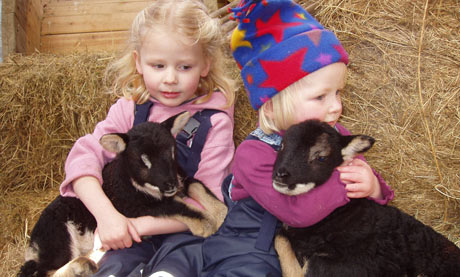
Nannerth farm, Wales This is farm diversification with knobs on. In the beautiful Wye Valley, the farm offers an apartment, two cottages, a gypsy caravan, wild camping (just you and the elements – no loo, no shower, no Wi-Fi), VW camper-van hire, and a "dog stay cabin" (for canine guests). The Gallagher family still find the time to manage 200 acres of hay meadows and Welsh mountain ewes. A conservation farm, it's all organic, partly powered by green energy and rich in wildlife. Regular hands-on breaks offer weekends of animal feeding and farmhouse breakfasts. From a treehouse hide, you can also try a bit of nocturnal badger-watching.
• 01597 811121, nannerth.co.uk/nf. Self-catering from £207 per week for two, £304 for four or £389 for six; three-night autumn breaks available

Moor Court Farm, Ledbury, Herefordshire

This 15th-century house is timber-framed with rustic oak beams; the Godsall family have tended its 500 acres since the 1920s, and they still grow cereals and rear livestock. Fields of hops – a Herefordshire staple – are almost a thing of the past in this hilly Welsh border county, but there are two traditional hop kilns in the yard. Stay in a poshed-up farmhouse bedroom (one has a four-poster), dine on Moor Court beef and lamb or local game and try a spot of autumn apple-picking (the farm's own orchards grow fruit for Weston's local organic ciders).
• 01531 670408, moorcourtfarm.co.uk. B&B from £35pp sharing or £40 single; evening meal from £19 a head

Church Farm, Suffolk

There are chickens and a pony, but the mainstays of this East Anglian farm are fruit and forestry: in summer until October, raspberries and strawberries; in autumn, tons of apples and pears; in winter, Christmas trees. Paul and Ruth Williamson's flinty farmhouse offers two lovely rooms (a double and a twin) – both lushed up with goose down duvets, Egyptian cotton, antique beds and handmade soaps. For breakfast, Ruth serves fresh eggs cooked on the Aga and seasonal home-grown fruit and for afternoon tea she offers home-made cakes and scones. For dinner, there's a decent village pub – The Manger in Bradfield Combust, just down the road.
• 01284 386333, churchfarm-bandb.co.uk. Doubles from £70 B&B

Yew Tree Farm, Cumbria

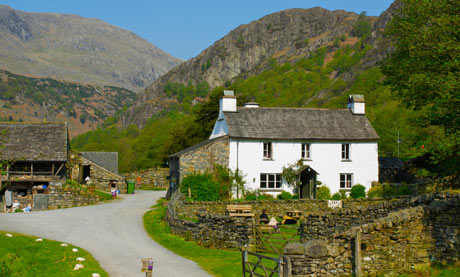
Yew Tree Farm, Cumbria Yew Tree Farm, near Coniston, Cumbria. Photograph: Alamy Set against a backdrop of craggy Lakeland fells, this 17th-century farmhouse near Coniston was owned by Beatrix Potter before she left it to the National Trust. In the 1930s, Miss Potter (the farm played a starring role in the movie) helped her tenants weather an economic downturn by suggesting they open a tearoom. She even bought the furniture. But though the furniture is still there the tearoom was recently closed. Jon Watson, today's tenant farmer, now supports his heritage meat business by letting his Grade II-listed farmhouse – all dark oak panelling, real fires, cruck-frame beams and patchwork quilts combined with rain showers and a hot tub. On the farm's 700 acres, discover sloping meadows of Swaledale and Herdwick sheep, big fluffy cows and spectacular views. In October, you can see Jon take his "tups", or mountain rams, to market in nearby Broughton-in-Furness.
• 015394 32321, yewtree-farm.com. Self-catering from £575 a week (sleeps six)

Lovesome Hill Farm, North Yorkshire

Lovesome Hill, north Yorkshire Mary and John Pearson's farm overlooks the Hambleton Hills from 165 acres of sheep-dotted fields, orchards and gardens between North Yorkshire's Moors and Dales national parks. There is one farmhouse guest room, another in a cosy cottage and four more in a converted granary – all very traditional (oak, beams, pine, upholstery). Walkers or cyclists can doss in a dorm-style bunk barn (Wainwright's coast-to-coast path skirts the southern edge of the farm). Aga-cooked breakfasts and evening meals include Lovesome's own eggs, bacon, beef and lamb, homemade breads, cakes, apple juice and jams. And you are invited to help collect eggs or join a spring lambing break.
• 01609 772311, lovesomehillfarm.co.uk Doubles from £72 B&B, bunk-barn beds from £11pp; dinner from £12.50-£25 a head

Heli-ski Kyrgyzstan's most remote regions


Lift lines and crowded slopes become a distant memory when you land atop the untamed, snowcapped, 4,500m-high Terskey Ala-Too range in northeastern Kyrgyzstan.
Specialising in mountain expeditions throughout Central Asia, K2 Adventures uses a private helicopter to transport daring skiers and snowboarders to the untouched terrain, limiting trips to a few small groups each year.
The area does not have typical skiing facilities, so the backcountry runs tend to stay unpacked and powdery. On a good weather day (temperatures vary from about -10C to -3C), skiers can expect to make about six trips down the mountain, descending about 800 to 1,200m depending on the route.
“Terskey is paradise for experts, with its high altitudes and wild slopes,” said Igor Fedyaev, managing director of K2 Adventures. “It’s a real no man’s land -- a huge area with very different shapes, eternal snow-covered summits and huge glaciers.”
The normal group size is about 13 skiers or snowboarders, with a maximum of 15 allowed on any trip. K2 Adventures uses Russian Mi-8MTV1 helicopters for the route, known for their ability to take off at altitudes above 5,000m, and pilots must have at least 15 years of flying experience. On the mountain itself, skiers are always accompanied by two guides, with at least one expert in avalanche safety. 
In case of bad weather, guides transport the group to Uzbekistan, either to the traditional ski resorts of Chimgan or Beldersay, to Tashkent, one of the biggest cities in Central Asia, or to Samarkand, a city with a mix of ancient mosques and monuments.
For intermediate-level skiers who still want the heli-ski experience, Fedyaev recommended Kyrgyzstan's Ala-Archa and Suusamur ranges, as the descents are more regularly traversed and they are only 150km south of the capital, Bishkek, should any accidents occur, compared to the 350km between Bishkek and the Tersky Ala-Too range to the east.
Practicalities
Email info@adventuretravel.ru to book. Trips run from January to April, and cost $3,990 per person to ski the intermediate range and $4,790 per to ski the more advanced range. Both trips are seven days long, which includes about eight hours of active helicopter time during the full trip as well as accommodation in Bishkek. Additional helicopter time can be added for $260 per person per hour.
On top of the fee, skiers and boarders must carry at least $20,000 worth of international health or accident insurance coverage, pay the $110 Kyrgyz visa fee if needed and pay for skiing and avalanche-preparedness equipment if they do not have their own.

Antigua rises from the ashes


It was 12 months ago that Volcán del Fuego lit up the sky above Antigua, sending grey ash to blanket the tender leaves of coffee trees growing more than 80km away. As scorching lava rolled 600m down the volcano’s slope, 33,000 people from 17 villages in the Guatemalan highlands were quickly evacuated.
Belying the devastation they bring, volcanoes are bewitchingly beautiful. I was among a small group of travellers who climbed Pacaya – the other active mountain visible from Antigua – six months after it erupted in 2010, prompting President Álvaro Colom to declare a national state of emergency. Though it was calm the morning we ascended, the mountain radiated heat; a small branch dropped into a hole in the crust lit on fire before it landed. Erring on the side of caution, we stopped to admire the panorama several hundred metres short of the smouldering peak, which again resumed its sputtering in January 2013. On the charred hillside below, mangled tree branches jutted out to meet the clear blue sky. To the northwest lay Fuego’s slumbering sister, Volcán del Agua, and just beyond it, in the verdant Panchoy Valley, was Antigua, a colonial town that writer Aldous Huxley described as "one of the most romantic cities in the world".
Entering Antigua for the first time is like stepping back in time. Most power lines are buried underground, and there are no traffic signs or signals. Stucco houses with terracotta roofs dating from the 18th Century wear lion’s head knockers on their doors; each building painted its own sherbet shade of pink, yellow, orange or blue. Bougainvilleas creep over walls and succulents spill out of iron-grilled windows. Three-wheeled tuk tuks zoom down the uneven streets past the Parque Central, where brightly attired indigenous locals peddle colourful textiles, wooden wares and traditional sweets; shoe shiners loiter; and Spanish professors chat over lunch. The city’s original 16th-century design – nine streets and nine avenues organized around an elegant Spanish square – remains unchanged. Wherever you stand, you need only look up to admire one of the majestic volcanoes that surround the town, sometimes feeling precariously close.
Despite the town’s present-day beauty, Antigua has persisted through its fair share of catastrophes, from the colonial-era decimation of the indigenous population  to a slew of disastrous earthquakes, the most recent of which killed 23,000 Guatemalans in 1976. The earliest-recorded tremor hit Antigua only two decades after its founding in 1543; several more in 1773 levelled it entirely, forcing the capital to move from Antigua to its current location in Guatemala City. But like a phoenix rising from the ashes, Antigua was born again in the mid-19th Century when hopeful elites pursuing coffee fortunes rebuilt the city. Since then, it has prospered – even amid a 36-year civil war that killed more than 200,000 indigenous Mayas in the late 20th Century.
Today, Antigua is the prized jewel of a country grappling with crime and corruption. As the anniversary of Del Fuego’s eruption and Pacaya’s recent rumblings remind, the nation’s larger problems are never far from this mountainous escape. Nonetheless, Antigua holds great reward for the adventurous traveller who craves historical intrigue, natural beauty and mouth-watering cuisine. Many travellers come for a day between visits to the Maya pyramids or Lake Atitlán, and are often surprised by the large number of things to do. To truly discover the best the city has to offer, start with the ghostly colonial ruins that won its designation as a Unesco World Heritage Site in 1979.
The most recognisable of these is the saffron-yellow Arco de Santa Catalina (5a Avenida Norte), the only remnant of an early 17th-century convent. The private passage within the arch was built so nuns could cross the street without being seen, and it is now a potent symbol of the city’s resilience. Most haunting are the ruins of the Iglesia y Convento de las Capuchinas (2a Calle Oriente and 2a Avenida Norte) in the city’s northeast quadrant. Built in 1726, the church housed the Capuchins, a severe order of nuns from Madrid who emphasised total abnegation. Ascent the tower to explore 18 nuns’ cells converging on a circular courtyard, and then descend into the dungeon where – rumour has it – wayward sisters were tortured.

Macau beyond the roulette wheel


Peer across the smoky gambling tables and the lines of slot machines in Macau’s crowded casino halls, and there is little doubt as to what the greatest attraction is for the majority of the 28 million people who visit this Special Administrative Region of China each year. Yet beyond the neon façade, Macau has much more to offer.
The Portuguese controlled Macau for almost 450 years and in that time built churches, fortresses and grand homes in the distinctive architectural style of their motherland. When Macau was returned to China in 1999, many locals expected the new rulers to gradually erase the legacy of the European colonial days. But Chinese authorities quickly realised that Macau’s unique heritage holds enormous potential to promote the region as a tourist destination. In the last decade, the Chinese have renovated many buildings in their original Portuguese style, installed typical early 20th-century Portuguese streetlights and made every effort to celebrate Macau’s colourful history.  
A stroll through the historic district’s narrow cobblestone streets makes it easy to see the fusion of Chinese and Portuguese that created such a distinct Macanese culture. Shops selling fresh egg tarts that could have come straight out of a Lisbon bakery are found alongside stalls with bak kwa, wafer-thin slices of marinated dried meat; colonial European buildings are decorated with bright red Chinese lanterns; even within the Catholic churches there are paintings of the Madonna and child, both with unmistakably Asian features and dressed in flowing Chinese silk robes.
Street signs meanwhile display names in Cantonese and Portuguese, with the two versions not always sharing the same meaning; the Portuguese wanted to commemorate historical figures by naming streets and alleys in their honour, but the Chinese did not always hold them in the same high esteem.
The most prominent landmark in Macau, beyond the garish glitz of the modern casinos, is the ruin of St Paul’s Church, a 17th-century Jesuit church that was destroyed by fire in 1835. All that remains is the elaborately carved façade, which dominates the skyline of old Macau, with the long set of steps leading up to the church crowded by Chinese visitors posing for photographs using it as a backdrop.
Above the site of St Paul’s Church and overlooking the South China Sea is a stone fortress, also built by the Jesuits in the 17th Century to defend Macau from attacks. The building now houses the Museum of Macau, a comprehensive collection of artefacts from before and after the arrival of the Portuguese. There are 16th-century maps, reconstructed streets made up of typical Chinese and Portuguese houses and cultural items such as puppets that shine a light on old Macanese life.
The most striking exhibit is a recreation of a cricket fight, demonstrating how the Chinese would bet on the outcome of a battle to the death between the two insects. The crickets were even tickled with a straw stick before a fight to increase their aggression. A champion cricket was feted as a hero and would be buried in a special casket after it had fought its final battle. Perhaps this display provides the strongest hints as to the roots of Macau’s gambling culture.
For a long time the Portuguese allowed Macau to decay slowly, reluctant to invest more than necessary in this distant outpost. Yet in the run-up to the handover of Macau to the Chinese in 1999, the Portuguese government took a renewed interest, keen to ensure a lasting legacy once their time in Macau was over. Cobbled streets, for so long put together with spare rubble from the city’s crumbling buildings, were renovated with the same high quality stone used to pave the streets of central Lisbon. Old buildings were restored to their former glory. Public statues were erected to commemorate Portugal’s role in Macau’s history; the most prominent example being the Friendship Statue at the foot of St Paul’s Church, featuring a Chinese girl handing a lotus flower (a symbol of purity) to a young Portuguese man.

A magical, fire-breathing timekeeper in France


La Maison de la Magie, a museum in Blois dedicated to the history of magic and illusionists. (CC Moutoons)
Forget cuckoos: when the clock of a seemingly normal building in France hits 12, six golden dragon heads emerge from the windows, spewing plumes of smoke and roaring at the crowds below.
For about five minutes, the imposing heads – each measuring 7m long – cock their heads in all directions and move to eerie music and clanging bells, before slowly retreating back inside.
Home of the La Maison de la Magie, a museum in Blois dedicated to the history of magic and illusionists, the building plays tribute to clockmaker and magician Jean Eugene Robert-Houdin, one of the most influential magicians of his time. The dragon clock was added in 1998 as part of the museum’s inauguration.
Born in Blois, France, in 1805, Robert-Houdin gave rise to many modern magic tropes, such as performing in massive curtained theatres (as opposed to in sideshows) and dressing in formal tailcoats. American magician Ehrich Weiss was so fascinated by the French magician that he created the now-famous stage name Harry Houdini as tribute.
The Maison de la Magie is opens from late March until early November. Admission costs eight euros per person, but the dragon show can be seen for free when standing across from the Chateau de Blois once the residence of French kings.

Thursday, August 22, 2013

The 7 best streets to shop in Paris

Ooh la la! The 7 best streets to shop in Paris


As the pulsing fashion capital of Europe, if not the world, a Parisian shopping experience will offer everything from luxury haute couture houses to sprawling chainstores. If you’re searching for authentic French labels, or eccentric designer stores, you can take your pick of those too. Below is the definitive list of where to part with those hard-earned euros:
Rue de Rivoli
Why go
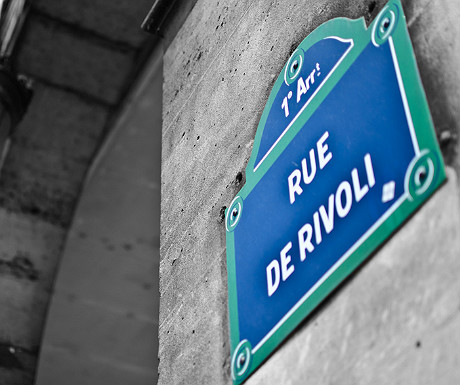
From boutique bargains to high-end marques, Rue de Rivoli delivers a great shopping experience. The street’s store directory reads like a who’s who of international brands, including Zara, H&M, Gap and Mango to name a few.There’s a huge BHV department store opposite the city’s Hotel de Ville, and numerous must-see landmarks are located just off this major street, including Museé du Louvre and the Tuilleries Garden. The old signage of the renowned La Samarataine store can still be seen, paying homage to the Paris of yesteryear. The dessert mecca, House of Angelina, can also be found on this street -boasting what may be Paris’ best hot chocolate.
Rue de Rivoli
What you should know
There are several tourist shops around the area near the Louvre, selling the usual trinkets and T-shirts, which can become very busy on the weekends. There is a shortage of dining choices on Rue de Rivoli itself but restaurants and cafés can be found in the close vicinity.
Boulevard Haussmann
Why go
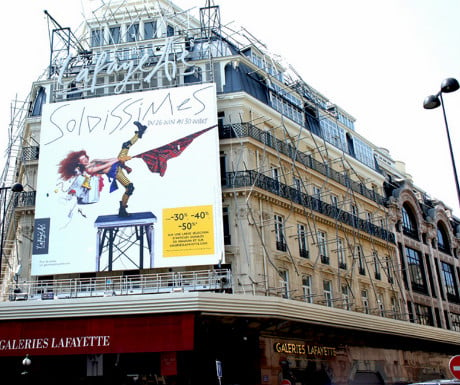
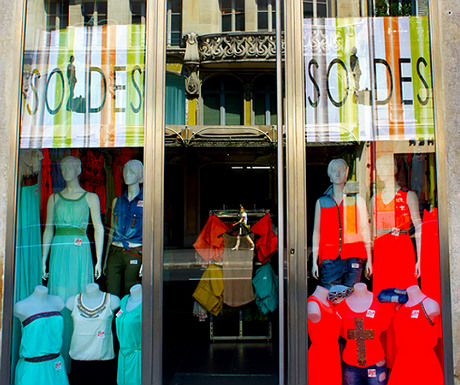
For the Galeries Lafayette of course! The upmarket department store located on Boulevard Hausmann first opened its doors in 1895, and has since become a Parisian institute. The store comprises 10 floors, and boasts a beautiful glass dome and a central staircase in a stunning Art Noveau design. Throngs of locals and tourists alike descend on the store for Paris’ bi-annual sales (les soldes), where goods are marked up to 70% off.
Boulevard Haussmann
What you should know
In December, the Galeries Lafayette Christmas decorations become a must-see attraction, with the highlight being the giant Christmas tree, located under the glass and steel dome.
Rue St Honoré
Why go
Rue St Honoré with its sophisticated extension, Rue Faubourg St Honoré, is one of the most upmarket shopping streets of Paris. Dedicated almost exclusively to luxury fashion design houses, from the likes of Hermes, Lanvin, Gucci, YSL and Michael Kors; it promises an immense concentration of ‘chic’ along its narrow passages. Just a few steps away is the famous square of Place Vendome with yet more of the top names in the fashion industry. For the über -trendy, there’s Colette; a lifestyle concept store which sells everything from clothing to gadgets. If you’re still not convinced on just how posh this street actually is, it’s worth noting that the home of the French president, the Élysée Palace, can also be found on Rue Faubourg St Honoré.
Dior on Rue St Honoré
What you should know
Watch out for well-dressed thieves in this area! There have been numerous incidents where well-heeled tourists, oozing the scent of money, have been robbed of their bags, cameras, or credit cards on this strip.
Avenue Montaigne
Why go
The only street to rival Rue Faubourg St Honoré in terms of prominence, luxury and prestige;the Grande Dame of Parisian streets is the Avenue Montaigne. Once upon a time it was called the ‘Widows Lane’ as French widows would gather there in mourning. As I stroll along thequiet, understated street, I too, find myself mourning; my card’s spending limit, that is!
From deluxe fashion labels to celebrated jewelers, the regal list includes the likes of Chanel, Valentino, Gucci, Christian Lacroix, Fendi, Harry Winston and Bulgari. The majestic Plaza Athénée hotel is also located on this street, adding to the glitz and glamour already found in spades.
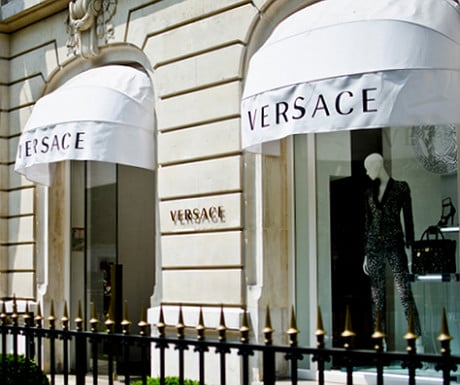
Versace on Avenue Montaigne
What you should know
The celebrity fly-trap of a restaurant, L’Avenue, is located on Avenue Montaigne. But be warned; some reviewers swear that the beautiful waitresses are a feast on the eyes whilst the food itself, leaves a lot to be desired.
Avenue des Champs-Élysées
Why go
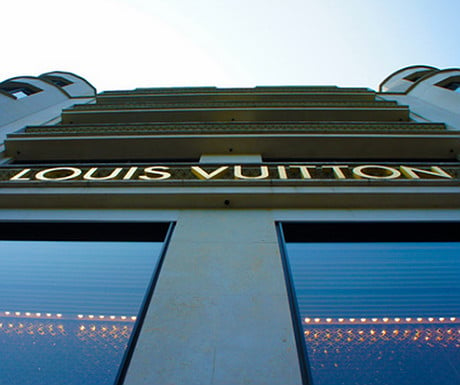
Given the unambiguous honor of being the world’s most beautiful street, the ChampsÉlysées is certainly one of the most famous. Marked at its beginning by the Obelisk of Luxor (Concorde), and lined throughout by bosquets of square-trimmed trees, the avenue concludes at the Arc de Triomphe. The City of Paris tried desperately to prevent the ‘banalisation’ of the street, by attempting to prevent global chain stores from setting up shop, but nowadays the likes of Zara, H&M, Gap and Benneton can be found neighboring designer labels such as Guerlain, Hugo Boss, Lancel and Cartier. The highlight of a shopping expedition on this famed street is a visit to the flagship Louis Vuitton store at 101 Avenue des Champs-Élysées. The shop’s window décor, which changes regularly, is often a treat to view in itself. The long line of people waiting for a chance to spend hundreds of euros; is another.
Louis Vuitton on Avenue des Champs-Élysées
What you should know
The street is exceptionally crowded, regardless of the season. The cafés along the center of the Champs-Élysées are a tourist trap, offering humdrum cuisine at exorbitant prices.
Boulevard Saint Michel
Why go
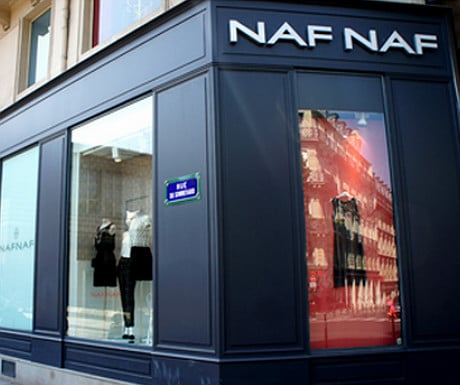
Unlike the high-end shopping streets of Paris, the Latin Quarter’s Boulevard St Michel is a typical neighborhood with a laid-back vibe. Shop the likes of Bennetton, Sinéquanone, and NafNaf, together with relatively affordable French chain stores such  as Camaïeu, Jules and Etam. The street is also renowned for its bookshops – one of the largest being Gilbert Joseph, and shoppers can enjoy a break from their arduous spending in the beautiful Jardin du Luxembourg, a stone’s throw away. With La Sorbonne university located close by, the area is awash with cafés and bars catering to the young and hip.
Naf Naf on Boulevard Saint Michel
What you should know
Boulevard St Michel connects easily with other famous streets of the Latin Quarter, including Boulevard Saint-Germain (which offers additional shopping choices) and Rue Soufflot which leads to the Pantheon.
Rue de Rennes
Why go
One of Paris’ longest shopping streets; Rue de Rennes is certainly made for pavement pounding, bags in hand – Pretty Woman style. Again, the charm of Parisian shopping is that big name designers often rub shoulders with large international chain stores; and Rue de Rennes is no exception. Add to the mix a scattering of quirky boutiques, and you have a shopper’s paradise. Located just on the other side of Jardin du Luxembourg from Boulevard St Michel, the street’s beacon is the Montparnasse tower (Paris’ tallest building).
Rue de Rennes
What you should know
The city’s largest FNAC (selling all things electronic and literary) can be found on Rue de Rennes. Take care of crossing the street though, as its sheer width and double-lane traffic in both directions can pose a hazard.

Sunday, August 18, 2013

Days will change your life

What makes a great journey?
A guaranteed transporting experience, first and foremost.
But after that it all depends on how you define “journey.”
If your version is restricted to a paved surface, at least two wheels and an engine, with a clear point A and B (and let’s not forget the cupholders), this list may not be for you.
Or maybe it is -- if you’re flexible enough to allow an elevator shaft in Taipei or a flight of stairs on a remote island in the South Atlantic to also qualify.
And a reindeer sled or a pair of ice skates or a Ferrari-styled roller coaster car to constitute a fair SMT (Suggested Mode of Transport).
What makes these 49 trips (listed in no particular order) the “best” ones out there? Ruthless subjectivity and provocative resolve to hear back from you about the 500 better ones we overlooked.
Some of these journeys can (or must) be done in a matter of minutes. Others may require at least one lifetime.
All of them are moving adventures worthy of true road warrior spirit -- in the broadest sense -- and solid proof that “moving about” is humanity's greatest obsession.
What's your favorite journey? Share it in the comments section.

1. Moscow to Vladivostok, Russia

trans-siberian expressLake Baikal -- Russia's way of saying: "Look at me."
SMT: Train
Board the Trans-Siberian Express in Moscow and rumble east into Russia’s interminable backcountry where the (relatively momentary) appearance of Lake Baikal reminds you you’re not on Jupiter.
Pull into the port of Vladivostok, 9,300 kilometers, seven days and eight time zones later. Yep, you’ve just clickety-clacked across a quarter of the earth’s circumference.

2. Sydney to several remote pubs, Australia

SMT: Helicopter
The world’s only helicopter pub crawl we know of departs from Sydney, soaring above the city’s famed harbor and touching down at several historic drinking holes spread across the beautiful (but curiously out-of-focus by mid-afternoon) New South Wales countryside.

3. Inca Trail, Peru

SMT: Foot
The groundwork for South America’s legendary cloud-forest, Andes-hugging, thin-air trek to Machu Picchu was laid over 500 years ago.
And the payoff at the end of your four-day, 43-kilometer hike -- gazing upon the legendary “Lost City of the Incas” with your own eyes -- remains as life-enhancing today as it was for pre-Columbian royalty.

4. Cape Town to Cairo, Africa

SMT: Your wits and 10 weeks minimum
Cape-to-Cairo. It just rolls off the tongue. Launching an independent road trip the length of Africa, on the other hand -- 17,000 kilometers and 11 countries (or so), featuring Victoria Falls, Mt. Kilimanjaro, lion and Whirling Dervish encounters, etc. -- is a different story.
We can’t wait to hear about it.

5. Adelaide to Darwin, Australia

SMT: Greyhound Bus
It’s been called “the longest bus ride in the world” -- a debatable factoid you won’t bother disputing after rolling for at least 42 hours (plus a six-hour layover in Alice Springs) along the planet’s most desolate, Greyhound-friendly continental midsection.
The draw: spectacular side trip opportunities en route, from spectacular Katherine Gorge and Ayers Rock to an underground bunker hotel room in Coober Pedy. All cheaply chauffeured by a trusty Greyhound driver who has to stay awake for you.

6. 0 to 240 km/hr, Ferrari World Abu Dhabi, United Arab Emirates

Ferrari World roller coasterPlease try to keep your arms, legs and internal organs inside the car.SMT: Ferrari Formula One-Styled Roller Coaster Car
Q: Does riding a roller coaster count as a “journey?”
A: On the world’s fastest one, a Grand Prix-themed beast with Ferrari-styled cars that accelerates to 240 kilometers per hour in four seconds, hits 4.8Gs and requires the use of goggles -- yes.

7. Amritsar, India to 'Shangri-La'

SMT: Royal Enfield
What’s really stopping you from touring India’s Himalayan foothills to the border of Tibet on a 500cc Royal Enfield Bullet? … Maps? A guide and team of on-call mechanics? A Royal Enfield motorcycle?
All of that’s included in TransIndus’s 15-day Trans-Himalayan Odyssey -- hairpinning through mountain passes, sweeping valleys and some of the most stunning alpine scenery you’ll ever witness astride India’s version of a Harley.

8. Union Square to Fisherman’s Wharf, San Francisco

SMT: Cable car
Buy your US$5 ticket at the Market St. turntable and line up with all the other tourists. Board either the Powell-Mason or Powell-Hyde line.
Roll north past Union Square, along the edge of Chinatown, up and over Nob & Russian Hills, and down to Fisherman’s Wharf, clanging all the way.
Check it off the list. You can bike across the Golden Gate Bridge tomorrow.

9. Ground floor to 89th floor, Taipei 101, Taiwan

SMT: Elevator
We love the vertigo-inducing, glass-fronted ride up Toronto’s CN Tower too. But for the sheer pleasure of blasting above the stifling masses in a steel box that “pushes the limits of people-mover technology,” according to Popular Mechanics, nothing quite matches an elevator trip up Taiwan’s Taipei 101.
No longer the world’s tallest building and fastest elevator, it remains the greatest vertical road to instant urban tranquility. One way ticket to the 89th-floor observation deck, please.

10. C2C Trail, England

SMT: Hiking boot and walking stick (Optional: Flock of Sheep and Border Collie)
Northern England’s Coast-To-Coast Trail (a.k.a. the “C2C”) stretches 192 miles from the Irish Sea at St. Bee’s to the North Sea at Robin Hood’s Bay, rambling through England’s famed Lake District and other picturesque settings with kindly folk and pubs.
Yes, you’ll be walking across an entire country. No, it shouldn’t wreck your knees or take more than a couple of weeks.
More on CNN: 10 top road trip apps

11. South Rim to Phantom Ranch, Grand Canyon, Arizona

Grand Canyon mule trekFour legs good -- so much better than four wheels.SMT: Mule
Hoofing down Grand Canyon National Park’s main artery, Bright Angel Trail, into the world’s most famous cleft is just easier and more sure-footed on a set of four hooves.
Book your mule at least a year in advance for the “Overnight Ride,” which includes a night at the bottom of the Grand Canyon at historic Phantom Ranch.

12. Khan Khentii, Mongolia

SMT: Yak
There’s only one place in the world to experience a Mongolian Yak Safari -- and we all know where that is.
Peregrine’s 14-day intro to Mongolia starts in Ulaanbaatar and features a three-day trek into the vast Khan Kentii wilderness with nothing but a yak-driven support vehicle, some local herdsman and your emerging ancient nomadic spirit.

13. Reykjavik to … Reykjavik, Iceland

SMT: Rental car
Iceland’s definitive 1,339-kilometer loop around the country along Route 1 (or The Ring Road) winds past remote glacial plains and weathered lava lands, over narrow wooden bridges, along steep sea-cliff-lined switchbacks, past endearing towns with unpronounceable names (Kirkjubæjarklaustur anyone?), and so on.
In the summer, you get to drive it in uninterrupted daylight.

14. Rideau Canal, Ottawa

SMT: Ice skates
Come winter, Canada’s most famous recreational waterway (a UNESCO World Heritage Site) turns into a skateway -- and the world’s largest ice rink.
Hardy Canadian locals commute to work this way, along a maintained section that runs for nearly eight miles through downtown Ottawa. Yes, you can rent skates at the canal, hold a black briefcase and pretend you’re doing the same. 

15. Amsterdam, Netherlands to Istanbul, Turkey (or equivalent)

SMT: Anything on the ground. Nothing in the air
It really doesn’t matter how you do it, or which pair of polar European cities you start and finish from -- as long as they’re about a dozen countries apart and you don’t cave and fly anywhere.
Mile-per-mile, overlanding across Europe remains the most definitive cross-cultural voyage anywhere.

16. Naples to Amalfi, Italy

amalfi coast roadGreat roads are even better if someone else is doing the driving.
SMT: Taxi
Why deal with Italian traffic while trying to sneak breathtaking seaside views along the Amalfi Coast when you can just hop into the back of a taxi driven by an experienced local who can handle this winding, precipitous road while yelling at his wife on the phone while playing tour guide and gazing admiringly out at Capri himself?

17. Milford Track, New Zealand

SMT: Foot
“The finest walk in the world.” A few hikes around the globe have been granted this status, including New Zealand’s signature 53.5-kilometer foot path through the heart of Fiordland National Park -- which might just get the nod for its spectacular South Island imagery and trekker-friendly lodging along the 5-day route.
Guided tours can be booked through the Milford Track’s licensed operator, Ultimate Hikes.

18. Deadwood to Custer State Park, South Dakota

SMT: Harley Davidson
Home to the famous annual Sturgis Motorcycle Rally, South Dakota’s signature rider rite of passage is the Black Hills Run (a.k.a. “the steeplechase for bikes”) -- a rolling, winding, wildly scenic journey from the former gold boomtown of Deadwood to the bison-rich fields of Custer State Park, with a pullout at Mount Rushmore.

19. Tashkent Metro, Uzbekistan

SMT: Subway train
The Moscow and Paris subways get plenty of attention. May we now acquaint you with Uzbekistan’s pin-up subterranean rapid transit system?
The Tashkent Metro is one of only two subways in Central Asia. This one’s not just nicer than Kazakhstan’s, but is one of the world’s most unsung, ornate subways -- featuring 29 uniquely-designed stations of glass, granite, marble and carved alabaster, designed by prominent artists and architects.
There’s no red, blue or green line quite like it.

20. Cabot Trail, Cape Breton Island, Canada

SMT: Car with good brakes and Gordon Lightfoot CD set
If there’s a bucket list drive in the Canadian Maritimes, it’s this 298-kilometer loop around the top of Nova Scotia’s Cape Breton Island -- featuring stunning Atlantic Coast scenery, numerous small-town seafood stops, whale sightings and superb day-trip hikes in Cape Breton Highlands National Park.

21. Lapland, Sweden

Lapland tripAnd you thought they only worked one day a year.
SMT: Reindeer sled
In the Swedish Arctic, you don’t have to be Santa to get pulled by a team of reindeer through the pristine Scandinavian tundra.
Sign up for a four-day, deer sledding expedition guided by local Sámi herdsmen with Nature Travels, and it’s like Christmas came early in Lapland.

22. Esquel to Ingeniero Jacobacci, Patagonia, Chile

SMT: Train
Calling any 1930s-era steam locomotive that maxes out at about 45 kilometers per hour on even older narrow-gauge track an express may be a stretch.
Board La Trochita (a.k.a. The Patagonian Express) and the thinking is, why would you want to go any faster through 400 kilometers of haunting scenery at the bottom of the world in an old, rattling wooden train car?

23. Grenada to Cape Vincent, Caribbean

SMT: Foot, taxi, ferry, mailboat
Grab a taxi in Grenada, board the Osprey Express for the 90-minute ferry to Carriacou. Run to the mailboat docks parked at the Government Dock in Hillsborough to get you across the border to Union island.
From there, catch an early morning ferry to Bequia and then board the Bequia Express to St. Vincent.
Who’d have thought the best inter-island road trip in the outer-Caribbean would be this easy?

24. Big Sur and the rest of California Highway 1

SMT: RV
California’s most magnificent patch of coast, Big Sur, winds for 93 gorgeous, perilous miles between San Simeon (Hearst Castle) and Carmel -- summoning great waves of joy, awe and car-sickness all in one movable sitting.
Getting above it all in a motor home lets you make use of over a dozen federal, state and private campgrounds hiding along the Big Sur coast and experience the rest of California’s spectacular, paved edge along Highway 1.

25. Athens to Marathon, Greece

SMT: Jogging shoes
More than 550 official marathon races in 69 countries on all seven continents are held annually around the world -- but the first one was run 2,500 years ago by a single Greek herald named Pheidippides who, legend has it, raced from Marathon to Athens (roughly 26 miles) in 490 BC to announce victory over Persia before dying on the spot.
Train responsibly and you’ll fare better on this hilly route that attracts thousands of bibbed heralds running from Marathonas to Athens’ Panathinaikon Stadium in the annual Athens Classic Marathon -- held every fall.

26. Turbo, Colombia to Buenos Aires, Argentina

Pan-American-HighwayOne road, a few wheels, a million memories.
SMT: Reliable car with easily replaceable parts
If there’s an easy way to drive the length of South America, it’s along the Pan-American Highway -- a.k.a. “the world’s longest motorable road” (which, technically, begins in Alaska).
Skipping the North and Central America part should make journeying through Colombia, Ecuador, Peru, Chile and Argentina a relative breeze. If you’re in Suriname, you made a wrong turn.

27. Calgary to Banff, Alberta

SMT: Car
The straightest shot from Calgary to Banff National Park is along the four-lane Trans-Canada Highway (Highway 1). But this is a road trip, right?
Opting for the alternate, two-lane route, Highway 1A, a picture-perfect, two-laner snaking along the quiet Bow river leads to the same pinch-me Canadian Rocky Mountain scenery at a far more enjoyable pace with some quaint small towns thrown in and a drive-by past the very spot where "Legends of the Fall" was filmed.
The moral of this story: wherever you are, don’t snub that “A” route.

28. Tijuana to Cabo San Lucas, Mexico

SMT: Reliable car with Mexican auto insurance
Driving 1,700 kilometers of Highway 1 in Mexico’s Baja Peninsula at 80 kilometers per hour from Tijuana to Cabo San Lucas will take you 21.25 hours if you don’t stop.
But you will stop. Possibly to change a tire or placate a bored 18-year-old Federale at a checkpoint in the middle of nowhere.
Or, mainly, just to marvel upon one of the wildest desert-meets-seascapes on earth. Just don’t forget that insurance.

29. Oslo to Bergen, Norway

SMT: Train or mountain bike -- or both
Northern Europe’s most gorgeous mountain- and fjord-fringed terrain sits between Norway’s capital and the west coast city of Bergen. The easy way to see it: on the 290-mile-long Bergen railway.
The harder way: on mountain bike along dirt service roads following the tracks. The happy medium: On the train to the top of the pass and downhill to Bergen on a mountain bike.

30. Anywhere on Antarctica

SMT: Double-hulled ship, Zodiac boat and (important) foot
Reaching the huge tabular icebergs, frenzies of wild penguins and bleached, otherworldly shores of Antarctica may be the best approximation to interplanetary travel on earth -- but it ain't a real journey unless you actually set foot on the place.
The majority of cruise ship visitors admire the White Continent from a distance without ever leaving their ship.
For an up-close, intimate journey that lets you actually stand on Antarctica instead of squint at it from the Lido Deck, sign on with an IAATO-member vessel specializing in leading smaller groups and offering multiple shore excursions.

31. Masai Mara National Reserve, Kenya

Maasai Mara National parkHippos, zebras and just out of sight a bunch of mesmerized tourists.
SMT: Horse
Witnessing Africa’s animals in a Land Rover is thrilling. Interacting with them on horseback -- galloping alongside zebra, giraffe and antelope -- on a riding safari with moving camps and local Masai tribesmen in the mix is a whole other deal.
Equitours’ flagship tour, traversing Kenya’s wildlife-rich Masai Mara National Reserve, features 11 days of basically playing Hemingway without the gun.

32. Coast to coast, Corsica, France

SMT: Renault Clio
There are many places to go for a white-knuckle test drive in a small European car, but none as simultaneously scenic, charming and full of random goat herds as Corsica.
Test your skills on the west coast’s D-81 above Piana, Cap Corse’s D-80, and the interior’s D-623 near Restonica Gorge. D = Dramatic on any of them.
Train travel on the single-track Trinighellu (“Trembler”) line is a scenic alternative, carving across the island’s mountainous center.

33. Campbell River, Vancouver Island, Canada

SMT: Snorkel and fins
Every year, thousands of salmon complete their own incredible road trip up Vancouver Island’s Campbell River, one of the Pacific Northwest’s most populated spawning grounds.
A three-hour “Snorkel with the Salmon” tour is on offer from Destiny River Adventures with their final leg floating down a not-so-lazy river with a mask and snorkel.
Best salmon run viewing is between late August and mid-September when all five native Pacific species (pink, coho, chinook, sockeye and chum) are present.

34. Chiang Mai Hill Country, Thailand

SMT: Elephant
Thailand’s estimated 2,000 domestic elephants have (at least officially) retired from logging duties and in the best cases found a more sustainable life in the tourism industry.
Your first job before climbing aboard one: finding a company with a humane track record.
Elephant “treks” range from short guided walks in Phuket to longer expeditions in Northern Thailand’s Hill Country -- including a three-day tromp through the Baan Na Kled Hoi jungle near Chiang Mai, interacting with Thai hill tribes and an amazing creature you can’t quite believe you’re sitting on.

35. Chama, New Mexico to Antonito, Colorado

SMT: Narrow gauge train
Between late September and early October, the best fall-color experience on steam-powered wheels is chugging between Chama, New Mexico and Antonito, Colorado on the historic Cumbres & Toltec Scenic Railroad.
Board at either end for a full- or half-day chug through Carson and Rio Grande National Forests, old sheep ranches and ghost towns lit up with autumn leaves.
Along the way, you’ll push beyond 10,000 feet at Cumbres Pass -- the highest pass reached by rail in the country.

36. Somewhere to wherever you end up, Dhaka, Bangladesh

Bangladeshi rickshawAnd all for less than the cost of your coffee at the end of the journey.
SMT: Rickshaw
It’s the journey, not the destination. We’ve all heard that old road trip adage -- which has a special meaning while riding in the back of a brightly-adorned rickshaw in Dhaka, the unofficial “Rickshaw Capital of the World.”
Weaving through ridiculous traffic in one of 400,000 cycle-rickshaws at last count, who really cares where you’re actually going? Just savor the ride.

37. Jamestown to Halfmoon Hollow, Saint Helena, United Kingdom

SMT: Quads, glutes and calves
Napoleon, died eight years before “Jacob’s Ladder” was built on St. Helena to transport goods from Jamestown to the top of Ladder Hill.
That means climbing the vertiginous stone stairway’s 699 steps from sea level to 600 feet puts you in an elite group that even an exiled French emperor isn’t part of. Don’t forget to buy your souvenir "completion" certificate at the nearby museum.

38. Sunrise at Mt. Batur, Bali, Indonesia

SMT: Shuttle van, foot
Get picked up from your hotel in the wee hours and ascend the forested, volcanic flanks of central Bali’s, 5,633-foot Mt. Batur at pre-dawn.
Atop the crater rim at sunrise you can gaze out while your guide cooks eggs on steaming hot rocks before hustling back down the live volcano.
Contact Bali Sunrise Trekking Tours or numerous other companies offering this trip, or book your own guide independently with the Association of Mount Batur Trekking Guides.

39. Lukla to Everest Base Camp, Nepal

SMT: Feet and Lungs
Hop a quick flight from Katmandu to Lukla -- home of the world's most hair-raising landing strip. Then start walking.
At least a week is recommended for the 62-kilometer trek up to Everest Base Camp, winding through Himalayan imagery and mountain villages colored in prayer flags en route to the gates of the world's highest peak.
Before turning around, wish all those mid-May crazies luck who call this oddly crowded spot just the beginning of their upward journey.

40. Denali Highway, Alaska

SMT: Dogsled
You don’t need to be an Iditarod athlete to experience authentic dog travel in the Alaskan wilderness -- but you will need to go to mushing school.
Fairbanks-based Paws for Adventure runs half- and full-day mushing classes and dogsledding overnights for the rest of us who won’t be racing 1,150 miles from Anchorage to Nome this year.
Their signature Alaskan Range Expedition is five nights of dogsled travel up and around the Denali Highway and McClaren Glacier. Not a sound but falling snow and jingling collars.

41. Merzouga to Erg Chebbi, Morocco

camel trek, moroccoGreat journeys aren't always comfortable.
SMT: Camel
Anyone drawn to the romance of camel travel probably hasn’t ridden one lately -- but is there a more primal place on earth to experience it than in the world’s largest desert?
The massive dunes of Erg Chebbi in southeastern Morocco are your portal into the Sahara from the tiny camel-trekking-serviced village of Merzouga. Yeah, you’re out there.

42. Cape Town to Hermanus or further, South Africa

SMT: Car
The most relentlessly pleasant drive on the bottom of the world starts in Cape Town and skirts east along the Western Cape past charming seaside villages, vineyards, beaches and marine mammal overlooks to Hermanus -- “South Africa’s Whale Town.”
That’s the quick 120-kilometer version. Add a zero and you can continue this South African coastal odyssey all the way to Durban.

43. The Great Wall, China

SMT: Foot
China's Great Wall sees about 20,000 daily tourists in its busiest section near Beijing. But that just leaves other magnificent parts of this 21,000-kilometer, two-millennia-in-the-making, not-so-modest masonry project foot-traffic free.
For example, sign up for ICA's WildWall Extreme trek-a five-day camping trip along 40 kilometers of remote Great Wall in neighboring Hebei Province, and the world's most wondrous wall was built just for you this week.

44. New Delhi to Agra, India

SMT: Tour bus
Define “tour bus” anyway you like, but the roads out of Delhi are so much nicer when someone else has to drive them.
A mere 200 kilometers southeast of this madness takes you to Agra and that checklist-notching date with the Taj Mahal.

45. Scotsdale to Upper Sonoran Desert, Arizona

SMT: Hummer
In Greater Phoenix, one can admire only so much saguaro and roadkill from behind the wheel of a white rented Neon.
The cure: offroading deep into the area’s rugged outback, the Sonoran Desert, at night with an ITT GEN 3 Night Vision Scope when the temperature’s dipped below 120 and the tarantulas, scorpions, wild pigs and Gila Monsters are just waking up.

46. Chamonix, France to Zermatt, Switzerland

Chamonix skiing adventureWho said skiing was all downhill?
SMT: Skis and crampons
The Haute Route (High Route), Europe’s most famous backcountry ski tour, traverses 120 kilometers of glaciated terrain from Chamonix to Zermatt and has been called the “the hut-to-hut tour to end all hut-to-hut tours” and the “the lifelong dream of fanatical off-piste skiers everywhere.”
Mountain Tracks offers a nine-day, all-inclusive journey along a select route tailored to avoid over-trafficked areas.

47. Dingle Peninsula, Ireland

SMT: Car or foot
Even if you don't know the Dingle Peninsula yet, you already kind of do. Tucked away on Ireland's southwest coast in ultra-scenic County Kerry, it packs scores of classic Irish images.
Craggy mountains swaddled in mist. Tilted green hills matted with yellow gorse and lined with old stone walls. Sawtoothed, frothy Atlantic shorelines. An old fellow squinting at you by the side of a quaint back road in a gray tweed cap with his ten million sheep.
The Dingle Peninsula is a microcosm of the Irish coast in one ruggedly stunning package that you can loop around by car in a single day. But make it at least two-or three.
Or over a week, if you have the time and quad muscles to hoof around the peninsula on the 179-kilometer Dingle Way, one of the country's most spectacular long-distance walking trails.

48. Guadalajara to Amititán, Mexico

SMT: "Tequila Express” train
Most classic weekend road trips are much happier on the way there than back. The Tequila Express is one notable exception.
You can board in Guadalajara at 10:30am, roll past agave covered hillsides into the village of Amititán (a.k.a. the birthplace of tequila) where you’ll visit some of the world’s oldest tequila distilleries -- before returning in a raucous train car full of passengers loaded on tequila, conga-lining to a mariachi band. Salud!

49. Pitesti to Cartisoara, Romania

SMT: Car, motorcycle or (gasp) bicycle
A couple seasons ago, "Top Gear" host Jeremy Clarkson put South-Central European scenic mountain driving on the map by exclaiming, “This is the best road in the world,” while touring Romania's national route 7C (a.k.a. the Transfagarasan Highway) with an Aston Martin, Ferrari and a Lamborghini.
That's in spite of the potholes, crumbly hairpins and tempestuous conditions that make this secluded, serpentining 90-kilometer, former military route through gorgeous Carpathian mountainscapes (and right past Vlad the Impaler's old hilltop digs) undriveable between mid-fall and late spring.
So come in the summer.